Posted by: Dylan Stafford | February 2, 2012

Kindergarten-101

Our son will turn five years old this April. That means we begin kindergarten this September.

I say “we begin” because in 2012, in Los Angeles on the west side, picking a kindergarten might was well be a family-based reality show.

In 1974, in Denison, Texas, there was only one kindergarten. My mom signed me up. I went. My first-day-of-school photo was taken in front of a chain-link fence with me styling with my chili-bowl, tow-headed haircut and soul-train-inspired, checkered pants. Go Mom with the fashion throw-down!

The only kindergarten variable was which teacher you got. There were two. My teacher was Mrs. Steward.

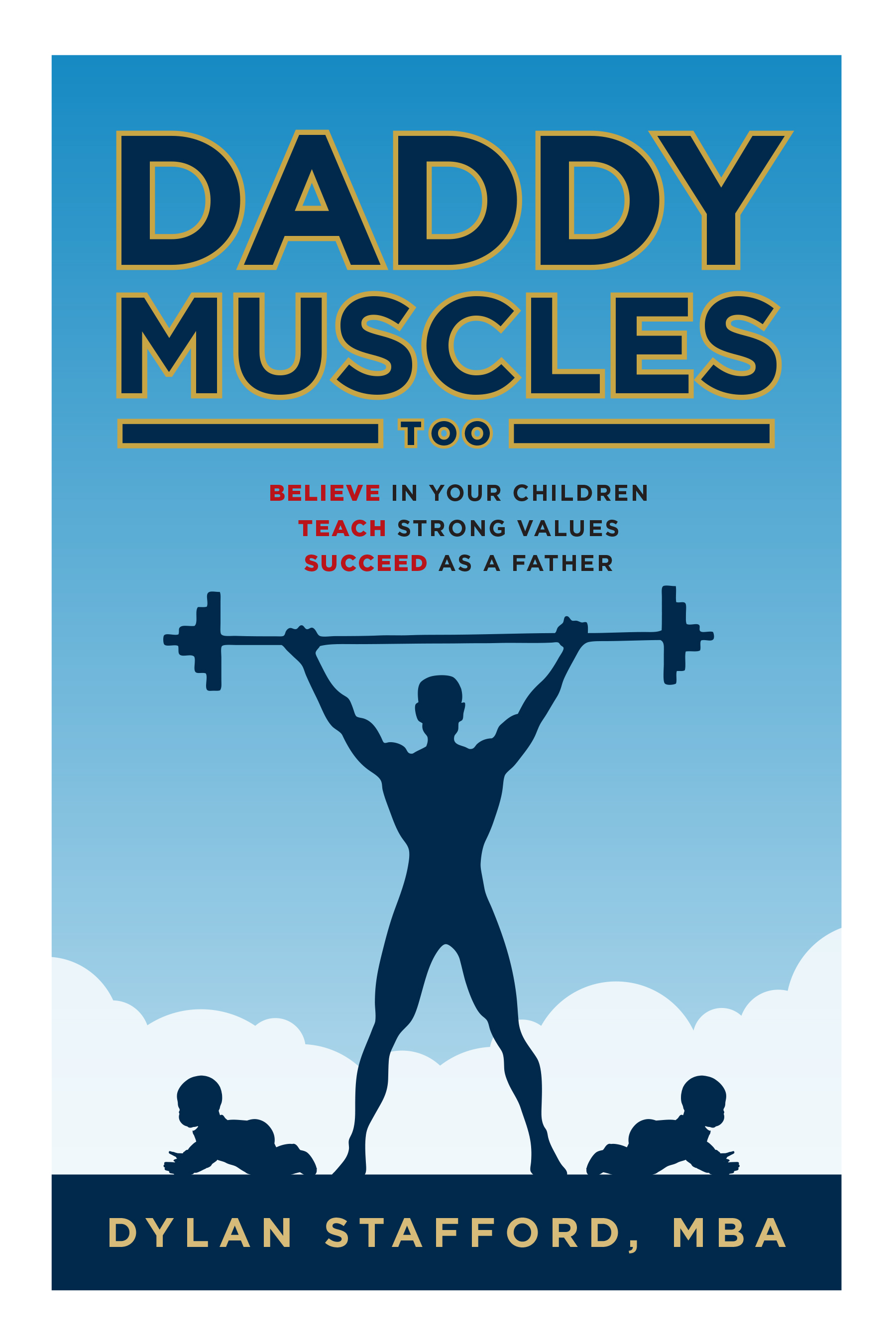
I have our kindergarten class photo too. That photo has friends in it I still talk to today. Travis was be the best man at my wedding and Roger would sing the Ave Maria. Priscilla is in the kindergarten photo and in two weekends I fly home to Denison to attend her wedding. She is re-marrying another friend of mine, Scott, who sent me the very first positive “review” of my book Daddy Muscles.

Denison had 20,000 people. Los Angeles has 4 million.

And just when I thought I was getting the hang of living here, along comes a new chance to feel like a novice all over again–choosing a kindergarten.

The trouble started last fall at a parent brown-bag luncheon hosted by parents at the UCLA pre-school Jack attends. These were parents whose children had already “graduated” pre-school and “matriculated” successfully on to kindergarten.

They talked about the importance of the decision and the choices of public and private and charter.

One person shared about driving over the hill each day, from the west side to the valley, to have her child in a good school. An hour of traffic, each morning and each afternoon. I sat in my seat and cringed.

There was a tone in the air–a sense of the overwhelming importance of this decision. I had the vision in my head of life-as-dominos.

Push the right kindergarten-domino and then elementary and high-school and college and a good job and marriage and babies and it all works out.

Push the wrong kindergarten-domino and Johnny-won’t-sit-still-in-class and video-games and hooky and teenage-pregnancy and high-school-dropout and drug-addiction and Las-Vegas-streetcorners and it’s all-your-fault-bad-parent.

I thought the tenor of the panel was too significant. Were the public school choices in Los Angeles really so horrible? Have I been living under a rock? Am I so naive and out-of-touch that I need to be as serious as these panelists? Is Jackson already doomed because his daddy is a small-town-Texas boy who isn’t qualified to make real decisions in Los Angeles?

I raised my hand and asked a question with a statement at the beginning.

“I appreciate you all organizing this panel today. Thank you for that. I’m new to this conversation of choosing a kindergarten and there’s obviously a lot to learn. My job here at UCLA is to be admissions director in one of the MBA programs. I just have to compete with the University of Chicago and Berkeley. Nothing nearly as competitive as finding a seat in kindergarten on the west side of Los Angeles…”

The audience laughed with me.

The panel… crickets.

I finished my sermonette with my question, “…So one of the things I always try to do when recruiting MBA students is to dial-down the pressure, to let them know that whatever they choose is going to work out. Can’t you say in retrospect that after all the hard work of choosing your kindergarten, to us the nervous parents following your footsteps, that it all will work out?”

Maybe it’s just that my question was too long. Probably just that.

But at that moment I felt like an idiot.  And not just an idiot, but the world’s worst parent too.

The panelists all stared at me inertly, like scientists passively looking at a bug.

I’d thrown them a softball. I’d given them a chance to dial down the tension that I thought was in the room. But maybe there was no tension from their point of view. Or even worse, maybe there was tension because this really was a big deal. This really was the most-important-domino and their job on the planet was to educate knuckle-heads like me to keep us from screwing up our children forever.

After the event I talked with some of the other parents and got a few, “Thanks for saying that” comments. The comments re-assured me but the panelists tone hung with me afterwards.

Was I really missing something here? Obviously there were more choices in LA than in Denison and we needed to get going to make a good choice for Jackson.

There was a journey ahead. The first stop was a kindergarten fair of all the 42 Los Angeles private schools. There was a flyer and I scheduled the date into my calendar. Marisa would be out-of-town on business the evening of the fair. I would have to go solo, all by my little-town, Texas-boy self…
Posted by: Dylan Stafford | January 24, 2012

Adoption Journey 3

(Cont.)

It was the lunch break of our Saturday, Pre-Adoption Workshop, and we all sat outside in the California autumn with our Subway sandwiches and drinks. USC’s campus is so urban compared to UCLA, but we were in a small courtyard oasis.

We got to know the other soon-to-be adopting families, what they were dealing with and why they were adopting. The hour passed quickly and we headed back inside for the second half of our workshop.

In the conference room a new woman was seated at the head of the table, waiting to be introduced. Our facilitators got us all seated and settled and we met our next speaker.

She was tall and elegant and carried herself with grace. Her clothes were flowing and she had gold bracelets and gold trim on her glasses.

“Good afternoon,” she began. “I was a birth-mother. I got pregnant at 16 and placed my daughter up for adoption. It was over 40 years ago, and the world of adoption was very different then.

“If you could believe it, it was the first time I’d ever been with a boy. We were just kids. We didn’t know what could happen, or what could happen after just one encounter.

“My family had stature in our city. We were a big family and my uncles were pastors at a large university church in our community. We were known.

“Again, this was a long time ago and things were different. I went to my parents and told them I was pregnant. They held a family meeting to decide what to do. I didn’t know any better; couldn’t know any better. They decided I would be sent away to have the baby. They decided the baby would be put up for adoption. They decided I would still have a chance to go to college and start my life without being a mother-at-sixteen.

“My boyfriend and his family came and asked to keep the baby. They were sincere, and nowadays there would be rights for the father, but times were different then.

“‘Mommy, why can’t I raise this baby?’ I asked.

“‘Where are we going to say that baby came from?’ was the reply I got from my mother, and that was that. We were a family in the community. This was a baby out-of-wedlock. Me keeping the baby was not an option.

“Before I tell you the rest of the story, I also want to jump ahead and tell you that I spent part of my career working as a social worker. In fact, I used to work here for Holy Family Services. So I’ve been around adoption both personally and professionally.

“I want to share with you the best perspective I have on what is happening to you as you go through adoption.

“I had a chapter in my life where I was down, where life wasn’t going well. Someone gave me a book to help me. The author was talking about his relationship with God, and he wrote that if he could pick one word to describe God it would be balance.

“At the time I didn’t get it. Balance? God? It didn’t make sense and it was one of those teachings I had to ponder for a number of years before it would click.

“You’re sitting here today, you’re pondering adoption. I’m sure each of your stories are different, but you’re all coming to terms with this process of adoption.

“And, if I could give you one word to describe adoption, it would be this.

“Timing.

“Adoption is about timing. It’s not about love or caring or emotions like that, it is about timing. If you are in this room, preparing yourselves to adopt, in 99% of the cases there is a fertility situation. The timing isn’t working with your biology. The baby you want to make on your own, right now, isn’t coming.

“The same thing can be said for the birth-mothers. For me, I was 16 and pregnant, just a girl myself. But the average age of our birth-mothers is late-twenties. These are grown women for whom the timing isn’t right.

“They get pregnant. They look at their life. And they have three choices: they can stop the pregnancy; they can have the baby, when in their heart-of-hearts they know they can’t give the baby the future they want to give it; or they can go through the whole 40 weeks of pregnancy, with the morning sickness and the stretching and all of it, and they can place their baby up for adoption.

“There are two sets of almost-opposite emotions happening at the same time in adoption, mourning and joy.

“The mourning is for ‘perfect future’ that isn’t going to happen. Then on the other side, there will be this joy, this huge swell of love as you ultimately receive your new baby into your life.

I sat in my chair and listened. She sounded like a preacher, like a woman people usually listened to.

One of my heroes is Father Richard Rohr. He’s a deep thinker and a spiritual director. I’ve listened to hundreds of hours of his lectures on CD as I’ve driven the 405 in Los Angeles.

Father Rohr says that the highest appreciation he ever receives from one of his lectures is when someone tells him, “Thank you. You named my experience.” His gift is teaching and lecturing and for him, the highest praise is to name someone’s experience.

As I listened to our birth-mother, as she told us about mourning and about joy, I got what Father Rohr was saying. This woman was naming my experience.

In the weeks that would follow, going through Thanksgiving and through the Christmas season, bit by bit I digested our Pre-Adopt Workshop.

She told the rest of her story. How the rest of her life went the over 40 years since she placed her baby for adoption. It was a fascinating, American tale of hope and love and life.

Her birth-daughter, as an adult, would locate her and they would create a relationship that goes forward to this day.

She herself went on to marry (not the sweet-sixteen boy) and have three daughters of own. Those three daughters would also re-unite with their half-sister. There would be girls-weekends and euphoria, and there would be mis-communications and breakdowns. It sounded just life sibling-life as I’ve known it with my own sister and brother and friends, life on life’s terms.

I was starting to appreciate the miracle of adoption. I was starting to empathize with what it might be like to be a birth-mother. I was starting to experience the spiritual connection that I’ll always share with a woman I’ve never met, but whose body is carrying the child I’ll always know.

It was the middle of the afternoon. Time for a coffee break.

Posted by: Dylan Stafford | January 16, 2012

Adoption Journey 2

(Continued)

After we completed the first exercise, discussing our biggest adoption fears, we met a family, two children who’d been adopted and their mother who had adopted them.

The first speaker was the son.

He was in his early twenties, tall and thin as only people in their early twenties can be, with black hair and olive skin. He could have been Hispanic or Italian or tan.

He told us his story: when he realized he was adopted; what that meant to him; how he didn’t want his friends to know; how his adopted mom is his real mom; and some of his feelings toward his birth-mother.

Next came his sister. She was sixteen-years 0ld, also thin and with black hair but her features could have been Polynesian, or African-American or some California-blend. She and her brother had different birth-mothers.

Initially, she wasn’t as confident as her brother, but after a few minutes she warmed up and was soon rolling full speed.

She also told us when she became aware she was adopted, but her response was the opposite of her brother’s. She told all her friends she was adopted, no secret at all. To her, being adopted was no different than a street address or her favorite movie and she always let everyone know.

Like her brother, her adopted mother was 100% “her mother.”

I asked both of them in the question and answer period, “This morning, some of us worried that an adopted teen-ager would get upset and say ‘You’re not my real parents!’ Did you ever do that, either of you?”

They looked at each other for a moment, then answered.

The daughter, “No. I don’t think I ever did that. We fight–don’t get me wrong. We’re a regular daughter and mother and we have arguments like everyone, but I don’t think I ever said that.”

“She,” the son said, pointing at his mother seated at the front of the conference room across from him. “…she is my mother. No matter what, she raised me and loved me and gave me my life. I wouldn’t be who I am or have the life I have if she hadn’t done what she did adopting me.”

I got a bulge in my chest as I heard him speak. His words were direct and deep and he was wise beyond his years on this. At 23, he knew more about his love for his adopted mother than I did for mine when I was his age.

They talked about the relations each had for their biological mothers, the two women who had given birth to them and had placed them up for adoption, and again they differed. The son held some bitterness, some wondering of how she could give him away. But while the son’s feelings seemed complicated, the daughter seemed clearer. She felt that her biological mother had made a difficult choice, but one that was for the best. They were both grateful for the life they had, but they looked at the situation of their birth-mothers differently.

Only later, driving home, did it dawn on me that neither of them spoke of their birth-fathers. All the conversation revolved around the birth-mothers. I wondered about this, whether the birth-fathers were really less important, or some kind of blind spot, absent in its absence.

The majority of adoptions these days are called “open,” meaning the children can know who their biological mother is and the biological mothers can know who has adopted their children. I had the picture in my head of orphanages, of the Cider House Rules, but that isn’t the way adoption has evolved in the US. We have the foster care system, which has replaced the orphanage system.

And open adoptions have replaced closed adoptions. Open can range from ongoing contact, like visitations at birthdays or major holidays to pictures mailed once or twice a year. I wonder what Facebook will bring. Will biological mothers “friend” the adopted mothers?

When my cousin Joel adopted his two sons, each adoption was different. With his first son Jasper, there was contact with the birth-mother the first year or two and then it faded away. In contrast, there wasn’t much contact at all with the birth-mother of their second son.

Sometimes birth-mothers will have specific requests like choosing a middle name or wanting their child to receive a Catholic education. There can also be the opposite case where a birth-mother doesn’t want to make any decision, where she asks the social agency to choose the receiving family and give their child the best future possible.

After the two kids, the third speaker was the mom, the woman who’d adopted. She was a heavy-set, very Caucasion woman in her forties with blond hair and pale skin. She sat quietly while her kids had spoken but when it was her turn to share she had plenty to say.

She talked about her situation with her husband and how adoption was the only way they were going to be able to have a family. She talked about the waiting period and the receiving period and the adjustment time of bringing each new infant into her life.

She spoke calmly and I got calm listening. It was a process. It was work. There was diligence required. And there was magic and there was love and there was joy and there was bliss. It sounded like life, like our experience of having Jackson.

She wasn’t at all defensive. There was no apologetic tone to suggest she wasn’t 100% the mother of the two. That was re-assuring to me. I’ve wondered if I’ll “take” to our new child. I’ve worried that maybe I’ll feel like I’m mostly the daddy, but not all-the-way the daddy.

As I listened to her, I remembered the words my cousin Joel had shared with me about the moment he received his child.

“Dylan,” he’d said, “it’s funny. There’s all this lead time up front, gettting certified, making your profile book, taking the classes, and just basically making up your mind that you’re really going to do this. Then, when you actually get the call, that there’s a baby that could be a match, well, when the call comes and you say “yes” things move pretty fast after that. And I tell you, when they placed Jasper in our arms and they told us ‘Congratulations. He’s your baby boy.’ I tell you he was our baby boy. Instantly. All at once. All the way. It was like all the worries we’d had the previous year-plus, none of them were there. We were parents and he was our son.”

That one-hundred-percent-ness that I’d heard about from Joel, I was hearing that same assuredness from this mother. She was their mother. She was accountable for the parenting she provided her children and they were accountable for the actions and choices they made. For a moment I felt young, like I wasn’t yet married and hadn’t already become a father, like a teen-ager peeking into the world of the grown-ups and wondering if I’d be a good grown-up when it was my turn to be one.

She talked about how the kids didn’t look like her, and what that was like. “My husband’s darker complected, so our son and he favor each other a bit but not so much our daughter. Me… well you see me. I’m about as white as they come so there’s never really been anyone who thought I was the birth-mother. But that’s OK.”

People asked some more questions and the family replied and we wrapped up and went outside to sit in a beautiful California November Saturday afternoon, blue skies and warm sunshine and Subway sandwiches with a diet Coke.

I was emotionally drained, and we were only half way through the day.

« Newer Posts - Older Posts »

Categories